Home /
Commercial Energy Performance Certificates
Home /
Commercial Energy Performance Certificates
Accurate, legally compliant EPCs for commercial properties across the UK.
A Commercial Energy Performance Certificate (EPC) rates your property’s energy efficiency, projected running costs, and CO₂ emissions. Required for most sales and lettings, each EPC is valid for 10 years and includes recommendations to improve energy performance. Our accredited assessors provide fast, reliable EPCs for all commercial premises.
Get a Commercial EPCAn Energy Performance Certificate (EPC) provides an energy efficiency rating for leasehold and freehold business or residential premises. Typically, an EPC is included in the seller's pack, as it is a requirement when selling your business. For clarity regarding any exemptions, you can consult your local Trading Standards Officer
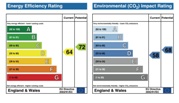 An Energy Performance Certificate (EPC) is a crucial document that assesses how energy-efficient a building is. It offers insight into the expected costs for heating and lighting the property, alongside its carbon dioxide emissions. An EPC also provides practical recommendations to enhance the energy efficiency of the building.
EPCs utilize an A-to-G rating scale:
Each EPC remains valid for 10 years from its issue date.
Exemptions from EPC Requirements
Certain properties do not require an EPC. These include:
Demolition and Vacant Properties
A building is exempt from needing an EPC if it meets the following conditions:
Why You Need an EPC to Sell Commercial Property
By law, all commercial properties must have a valid EPC unless exempt. Failure to provide one can result in fines ranging from £500 to £5,000
Benefits of an EPC for Buyers
For buyers, an EPC offers a clear view of the property's energy efficiency. It helps them estimate heating and lighting costs, while suggesting upgrades to improve energy usage an attractive feature for long-term savings.
What Happens During an Assessment?
An accredited energy assessor will conduct a thorough evaluation of your property, examining:
Need an EPC? Nationwide Businesses Can Help!
Simply complete our application form, and our qualified energy assessors will handle the assessment process for you - from start to finish
Learn more, contact Nationwide Business Finance to find out the best options available for your needs.
A Commercial EPC rates a building’s energy efficiency, projected running costs, and CO₂ emissions using the standard A–G scale, where A is most efficient and G is least efficient.
You must have a valid EPC when selling or letting a commercial property unless the building qualifies for an exemption.
A Commercial EPC is valid for 10 years, provided no major structural or energy‑related changes have been made to the building.
It includes the building’s energy rating, estimated heating and lighting costs, CO₂ emissions, and recommendations for improving efficiency.
An accredited assessor inspects the building’s construction, insulation, glazing, heating, ventilation, and lighting systems to calculate its energy performance rating.
Yes. Exemptions include listed buildings, temporary structures, places of worship, low‑energy agricultural or industrial buildings, small detached buildings under 50 sqm, and properties intended for demolition with the correct permissions.
Fines range from £500 to £5,000 depending on the property’s rateable value.
If the property is genuinely intended for demolition and the correct planning permissions are in place, it may qualify for an exemption. Otherwise, an EPC is still required.
It provides clarity on energy efficiency, expected running costs, and potential improvements, helping buyers and tenants make informed decisions.
You can book an EPC assessment through Nationwide EPC by completing the application form. An accredited assessor will then arrange a suitable appointment.
Follow us:


Nationwide Businesses are the Largest, No Sale No Fee, Business for Sale Agents in the UK. We have been Selling Businesses since 1959 and are pleased to offer Free Valuations and never charge any advertising fees.
© 1996 – 2026 Nationwide Businesses Ltd. All Rights Reserved.